

Most SSD applicants receive an initial decision within three to eight months, but appeals can take much longer.
Knowing how long does it take to get SSD can make an uncertain process feel more manageable. The timeline depends on your work history, medical records, claim type, state processing times, and whether you need an appeal. This guide explains each stage, common delays, payment rules, and practical steps that may help your claim move forward.

How Long Does It Take to Get SSD?
For most people, how long does it take to get SSD depends on whether the claim is approved at the first review or after an appeal.
A general timeline looks like this:
• Initial application decision: About three to eight months
• Reconsideration appeal: Often several more months
• Administrative law judge hearing: Commonly six months to more than a year after the request
• Full process with appeals: One year to two years or longer
These are estimates, not guarantees. Some people receive a decision sooner. Others wait much longer because of missing medical evidence, a complex condition, a required medical exam, or a large hearing backlog.
SSD usually refers to Social Security Disability benefits. This may mean Social Security Disability Insurance, or SSDI. Some people also use “SSD” to describe Supplemental Security Income, or SSI, even though SSI has different financial and eligibility rules.

SSDI and SSI Have Different Timelines
Before asking how long does it take to get SSD, identify which benefit you are seeking. SSDI and SSI both help people with disabilities, but they are not the same program.
SSDI
SSDI is based mainly on your work record and the Social Security taxes you paid through past employment. You generally need enough recent work credits and a medical condition that prevents substantial work.
If approved, SSDI usually has a five full-month waiting period after the date Social Security determines your disability began. Benefits generally start in the sixth full month of disability, although special rules may apply.
SSI
SSI is based on financial need, income, and limited resources. You do not need the same work history required for SSDI.
SSI does not have the same five-month waiting period. If you meet the financial and medical rules, payments may begin based on your eligibility date. However, the application and medical review can still take several months.
Some people qualify for both SSDI and SSI. In that case, Social Security reviews each benefit separately, which can affect how long does it take to get SSD and when payments begin.
The Main Stages of an SSD Claim
Understanding the steps can help you estimate how long does it take to get SSD in your own situation.
1. You submit the application
You can usually apply for SSDI online, by phone, or through a Social Security office. SSI applications often require a phone or office appointment, although the process may begin online.
Your application should include:
• Your medical conditions
• Names and contact details for doctors, clinics, and hospitals
• Dates of treatment
• Prescription information
• Work history
• Education and job duties
• Bank and household details for SSI
• Information about your symptoms and daily limitations
A complete application gives reviewers a clearer starting point. It does not guarantee approval, but it can reduce avoidable requests for basic information.
2. Social Security checks nonmedical rules
Social Security first reviews rules such as work activity, insured status, income, and resources. A claim may be denied at this stage if you do not meet a basic technical requirement.
For SSDI, the date you last worked enough to remain insured can be important. For SSI, income and resource limits may affect eligibility before the medical review is complete.
3. A state disability examiner reviews medical evidence
Social Security usually sends the medical part of the claim to a state agency. A disability examiner and medical consultant review your records and decide whether your condition meets the program’s disability standard.
The examiner may contact your doctors for records. If the evidence is incomplete, you may be sent to a consultative examination with an independent medical provider.
4. Social Security sends a decision
The agency sends a written approval or denial notice. The notice should explain the decision and tell you how to appeal.
Do not ignore the date on the notice. The appeal deadline is usually 60 days, plus five days allowed for mailing. Missing the deadline can force you to restart the process or explain why your appeal was late.
5. You appeal if needed
Many legitimate claims are denied at the first stage. A denial does not necessarily mean you cannot qualify.
The appeal process may include:
• Reconsideration
• A hearing with an administrative law judge
• Review by the Appeals Council
• A federal court action
Each step adds time. This is why the answer to how long does it take to get SSD may range from a few months to several years.

What Causes SSD Delays?
Several factors can change how long does it take to get SSD. Some are outside your control, but others can be prevented.
Missing or slow medical records
Medical evidence is often the biggest source of delay. A clinic may take time to respond, use an outdated address, or send records that do not explain how your condition affects work.
Treatment notes are most useful when they describe function, such as how long you can stand, sit, walk, lift, focus, or use your hands.
A consultative examination
Social Security may schedule an exam when your records are not enough to decide the claim. The exam is usually paid for by the agency, but you must attend or promptly explain why you cannot.
Missing the appointment without a valid reason can delay the case or lead to a denial based on insufficient evidence.
Complex medical conditions
Claims involving several conditions, mental health symptoms, fluctuating symptoms, or long-term treatment may require more review. The agency may need records from multiple providers.
A complex claim is not automatically stronger. Clear, consistent evidence matters more than the number of diagnoses.
Work activity
If you continue working, Social Security may examine whether your earnings show substantial gainful activity. Work attempts, reduced hours, accommodations, and unsuccessful work efforts may require careful explanation.
Report changes honestly. Do not stop reporting work or income because you are waiting for a decision.
State and hearing backlogs
Disability claims are processed by state agencies and hearing offices with different workloads. Two people with similar conditions can experience different wait times depending on where they live.
Incomplete appeal forms
An appeal that lacks updated medical information or a clear explanation of worsening symptoms may take longer to evaluate. It can also weaken the case.

How to Check Your SSD Claim Status
You can check how long does it take to get SSD by monitoring your claim through your personal Social Security account. The online status tool may show whether your application is still under review, has moved to a state disability agency, or has received a decision.
You can also contact Social Security by phone or visit an office. Keep a simple record of:
• Application dates
• Appeal deadlines
• Names of representatives you speak with
• Medical records you submitted
• Letters you received
• Scheduled examinations and hearings
If you have an attorney or accredited representative, that person may also receive case updates. Still, do not assume your representative will know about every letter or deadline. Send copies of notices as soon as you receive them.

How Long Does It Take to Get SSD Back Pay?
Back pay depends on your established disability date, application date, benefit type, and any waiting period.
For SSDI, the five-month waiting period can reduce the amount of payable benefits. If Social Security finds that you became disabled long before applying, you may qualify for retroactive benefits, but limits apply.
For SSI, payment calculations may consider your application date and financial eligibility. SSI back payments may be issued in installments rather than as one large payment, especially when the amount is substantial.
Back pay is not guaranteed simply because you are approved. Social Security calculates it after reviewing the exact dates and benefit rules in your file.

When Will the First SSD Payment Arrive?
Approval and payment are separate steps. After approval, Social Security must calculate your benefit amount, confirm payment information, and apply any waiting rules.
SSDI payments are commonly paid the month after the benefit month. The exact payment day may depend on your birth date or other payment scheduling rules.
SSI payments are generally issued at the beginning of the month. Payment timing can change when a scheduled date falls on a weekend or federal holiday.
If you are approved but do not receive a payment when expected, review your award notice and contact Social Security. A payment issue may involve banking information, an offset, a workers’ compensation rule, or a calculation that needs clarification.

Does Medicare Start When SSDI Is Approved?
Medicare usually does not begin on the same day as SSDI approval. In most cases, Medicare eligibility begins after a 24-month period connected to SSDI entitlement.
There are important exceptions. People with amyotrophic lateral sclerosis may qualify for Medicare sooner, and people with end-stage renal disease follow separate rules.
Medicaid may be available sooner for some SSI recipients, depending on state rules. Because health coverage rules are complex, check your approval notice and contact the appropriate benefits office.
Practical Ways to Avoid SSD Delays
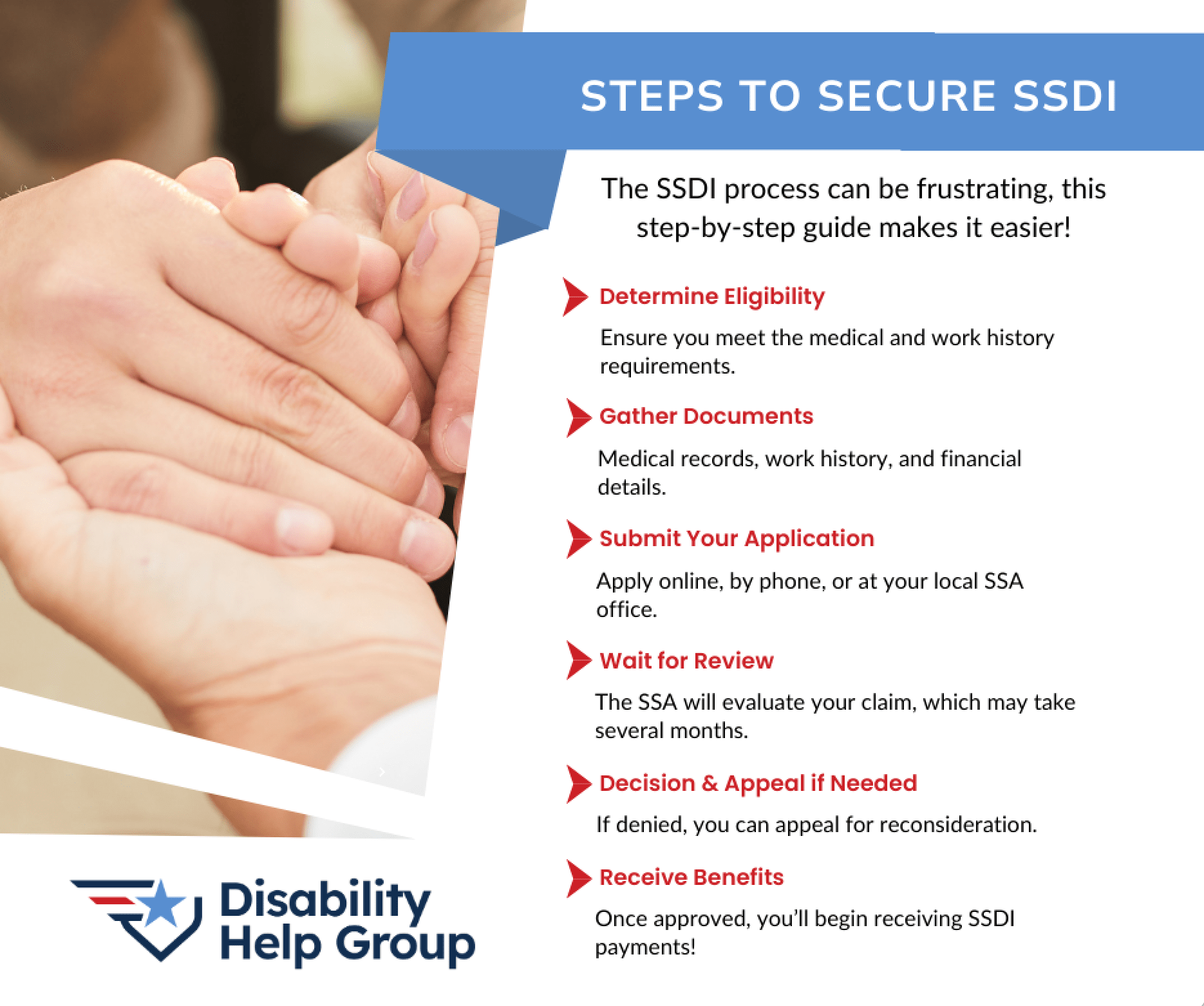
You cannot control every part of how long does it take to get SSD, but you can make your file easier to review.
Apply as soon as your condition prevents sustained work. Waiting may create gaps in treatment and make your timeline harder to explain.
List every important medical provider. Include hospitals, therapists, specialists, urgent care clinics, and mental health professionals.
Describe function, not only diagnoses. Explain what happens when you try to work, stand, lift, remember instructions, interact with others, or maintain a schedule.
Respond quickly to letters and phone calls. If you need more time, contact the agency before the deadline.
Attend every consultative examination. Take the appointment seriously and describe your real limitations without exaggerating.
Keep medical treatment consistent when possible. If you cannot afford care, explain that problem and ask about low-cost clinics or community services.
Report work and income changes. This is especially important for SSI and for anyone attempting part-time work.
Appeal on time. Do not assume a denial is final.
Save copies of everything. Keep applications, medical documents, notices, and appeal forms in one folder.
A common mistake is giving only a diagnosis, such as “back pain” or “depression.” The more useful explanation is what the condition prevents you from doing and how often those limits occur.
A Realistic Example of the SSD Timeline
Imagine a worker with severe rheumatoid arthritis who stops working in January. She applies for SSDI in February and submits records from a rheumatologist, primary care doctor, and physical therapist.
Her state disability agency requests updated treatment notes and schedules a consultative examination. She receives an initial decision in July. If approved, her payment date still depends on the established disability date and the SSDI waiting period.
If denied, she can appeal within the required deadline. A reconsideration decision may take several more months, while a hearing can take considerably longer. This example shows why how long does it take to get SSD cannot be answered with one fixed number.
In cases like this, the strongest records usually connect symptoms to work limits. A note that says “patient has arthritis” is less helpful than a detailed record explaining limited hand use, reduced stamina, frequent flare-ups, and missed work days.
What I Have Learned From Reviewing SSD Cases
One lesson that comes up again and again is that people often underestimate the value of small details. They may tell a doctor they are “doing okay,” then tell Social Security they cannot function at all. That difference can create confusion.
Your medical records should be honest and consistent. You do not need to sound worse than you are. You do need to explain bad days, good days, side effects, flare-ups, and the amount of help you need at home.
Another mistake is waiting until an appeal hearing to gather evidence. Start early. Keep a symptom diary, follow treatment instructions when possible, and ask providers to document specific work-related limits.
These steps cannot guarantee approval. They can make your claim clearer, more accurate, and easier for a reviewer to understand.
Frequently Asked Questions About How Long Does It Take to Get SSD
How long does it take to get SSD after applying?
Many applicants receive an initial decision within three to eight months. The actual time depends on medical evidence, state workload, consultative exams, and whether Social Security needs more information.
Can SSD be approved in less than three months?
Yes, some claims move faster when the medical evidence is strong and the condition clearly meets Social Security’s rules. Compassionate allowances and other fast-track programs may also speed up certain qualifying cases.
Why is my SSD claim taking so long?
Common reasons include missing medical records, a pending consultative exam, multiple medical conditions, work activity questions, or processing backlogs. Contact Social Security if your case has had no update for an unusually long period.
How long does an SSD appeal take?
A reconsideration appeal may take several months. If you request a hearing, the wait may be six months to more than a year, depending on the hearing office and case volume.
Do I get paid while waiting for SSD approval?
Usually, no regular SSDI or SSI payments are made while an initial claim is pending. If approved, you may receive back pay based on program rules, established disability dates, and applicable waiting periods.
Does hiring a disability lawyer make SSD faster?
A representative cannot guarantee a faster decision. However, an experienced representative may help organize evidence, meet deadlines, identify weak points, and prepare an appeal.
Conclusion
How long does it take to get SSD depends on your benefit type, medical evidence, work history, state workload, and whether you must appeal. An initial decision often takes three to eight months, while a full appeal can take a year or longer.
The best steps are simple: apply promptly, provide complete medical details, describe your daily limits clearly, attend every exam, track deadlines, and appeal quickly if denied. Review your claim status regularly and seek qualified help when the case is complex.